© 2026 nimisham.in
While the centuries-old tradition of offering Chhappan Bhog (56 offerings) to Lord Krishna during Janmashtami continues unchanged at some of India s most revered temples, a new generation of Krishna...
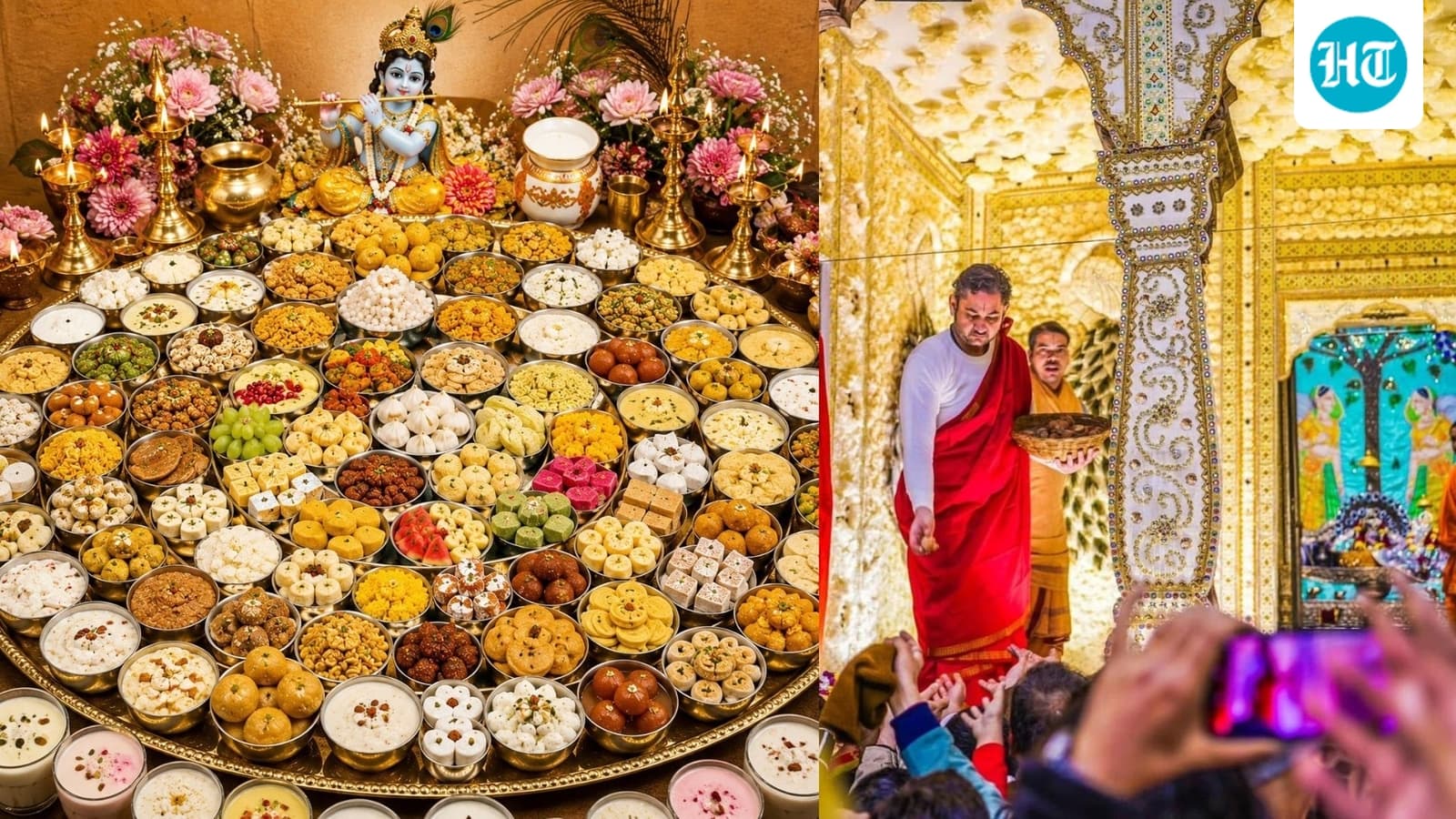
While the centuries-old tradition of offering Chhappan Bhog (56 offerings) to Lord Krishna during Janmashtami continues unchanged at some of India’s most revered temples, a new generation of Krishna devotees is giving the festive menu a contemporary twist.
From traditional temple fare steeped in ritual to inventive interpretations that bring modern flavours to the table, the spirit of devotion remains at the heart of every offering. Here’s a look at the places, age-old traditions and the delicious offerings that make Janmashtami a feast for both the soul and the senses.
Shri Radha Raman Temple, Vrindavan (Uttar Pradesh)
“Janmashtami is observed with love, devotion and an unwavering commitment to rituals passed down through generations,” says Pundrik Goswami, who leads the Goswami Parampara of his family.
At Radha Raman Ji, the Janmashtami observance takes place during the day. “The bhog here carries its own distinctive tradition. While Chhappan Bhog is offered to Thakur Ji in temples across the country, here the first traditional prasad offered on Janmashtami is til (sesame). This is followed by makhan-mishri, which is then distributed among devotees.”
The rasoi where bhog is prepared is 486 years old and Goswamis here prepare the bhog.
He adds, "Here every tradition holds uniqueness and reasons behind their creation, the celebrations here also differ from the familiar midnight rituals associated with Krishna’s birth. While many temples mark the janam at midnight, Radha Raman Ji’s Janmashtami observance takes place during the day, beginning with the sacred abhishek and followed by aarti.
The 150-year-old Goswami families of Vrindavan, belonging to the lineage of Swami Haridas, bring a special offering of paag—a traditional barfi made with coconut, makhana, badam, chironji and kharbooja seeds, among other ingredients—for the bhog, says temple priest Shailendra Nath Goswami.
“After abhishekam and shringar, paag is offered to Thakur Ji, followed by the Mangal Aarti darshan, which takes place only once a year, on Janmashtami. The prasad, along with the panchamrit used for the abhishekam, is then distributed among the Goswami families as well as devotees,” he says.
The temple’s bhog tradition unfolds through the day, with offerings made eight times from morning until night. “It begins with Uthapana, when makhan-mishri is offered, followed by Shringar, which includes fruits, and then Baal Bhog and Raj Bhog, featuring the traditional 56 offerings. The evening bhogs include Uthapana, Gwal Bhog, comprising lighter offerings, and Shayan Bhog. The final offering of the day is milk served in a khullad,” Goswami explains.
At the temple, the Janmashtami bhog is a simple yet deeply rooted offering of fresh fruits and makkhan (butter). Gouri Shankar Singhari, a priest at the temple, explains that the tradition is observed at the Krishna idol near the Garud Pillar, placed before the Lord Jagannath Trimurti.
“The Janmashtami bhog is offered to the Krishna idol, which is placed on a swing. Women from the Yadav community in the city and nearby areas come to the temple to participate in the offering, which is made by the temple priest. As part of the birth utsav, all varieties of Indian fruits along with makkhan are offered as prasad. In addition, a festive bhog is prepared in the temple’s famous kitchen and served to devotees,” he says.
Temple priest Mitesh Kumar Upadhyay says, “The biggest ritual is khule parde mein shringar, which devotees are allowed to witness. It takes place only on Janmashtami and on Amavasya in the month of Jyeshtha.”
On Janmashtami, 11 bhogs are offered behind closed curtains by the priest, and these rituals are not open to public view. The only bhog that devotees can witness is during Annakoot. “The day begins with the offering of makhan-mishri, followed by the elaborate Raj Bhog and concludes with Shayan Bhog. Each bhog is different and prepared with great detail. Throughout the day, laddoo and khaja-puri are distributed among devotees. After Raj Bhog, both dry prasad and a full meal are served,” he says.
The world’s tallest temple, currently under construction, is rooted in tradition while remaining open to new ideas.
“On Janmashtami, only mataayein (women) prepare the prasad. Everything is saatvik, but we offer both traditional and regional cuisines as bhog, and the menu changes too. Makhan-mishri, however, remains the main bhog,” says Shree Nidhi Govind Dass.
While these dishes are not part of the bhog, the temple premises also offer a contemporary take on saatvik food. Pizza, pasta, lasagna, tarts, tres leches, bomboloni, banoffee pie, cheesecakes, vegetable patties, soups and focaccia are served without onion or garlic. The bomboloni, for instance, is made without cocoa and uses carob powder instead, while the breads are prepared with wheat and rice flour—giving familiar favourites a distinctly saatvik spin.
“With people increasingly opting for healthier foods and sweets, we decided to create better-for-you offerings for both the deities and devotees, especially those with diabetes or other health conditions that restrict their sugar intake,” says Keshav Priya Devi Dasi, HOD, ISKCON Prasada, Govinda’s Restaurant.
The sweets are prepared using alternatives such as jaggery, date sugar and coconut sugar. “We bake rather than fry our dishes, and even our ingredients are carefully chosen—we use unrefined sugar, unrefined oils and flours. This results in healthier sweets that devotees can enjoy without guilt,” she adds.
Ruchika Garg writes on food, health, culture, and lifestyle for the Daily Entertainment and Lifestyle supplement, HT City.Read More
Deep Saxena writes on Bollywood, OTT, television, food and culture for the daily Entertainment & Lifestyle supplement, HT City.Read More